
Side-Draft vs Down-Draft Cooler Sizes
4 min read
Compare airflow, cabinet shape, cover openings, and measurement points for side-draft and down-draft evaporative coolers in inches or centimetres.
This comparison page explains which measurements and openings change with draft type. Use the dedicated size chart for common dimensions, and the individual side-draft or down-draft guides when diagnosing exposed intakes or water pooling.
Need the quick reference first? Full swamp cooler cover size chart
Side-Draft vs Down-Draft at a Glance
Draft type describes where conditioned air leaves the cabinet, not where every intake louver sits. Identify the outlet and duct connection before choosing a cover; two cabinets with similar dimensions may need different openings, hems, and tie-down positions.
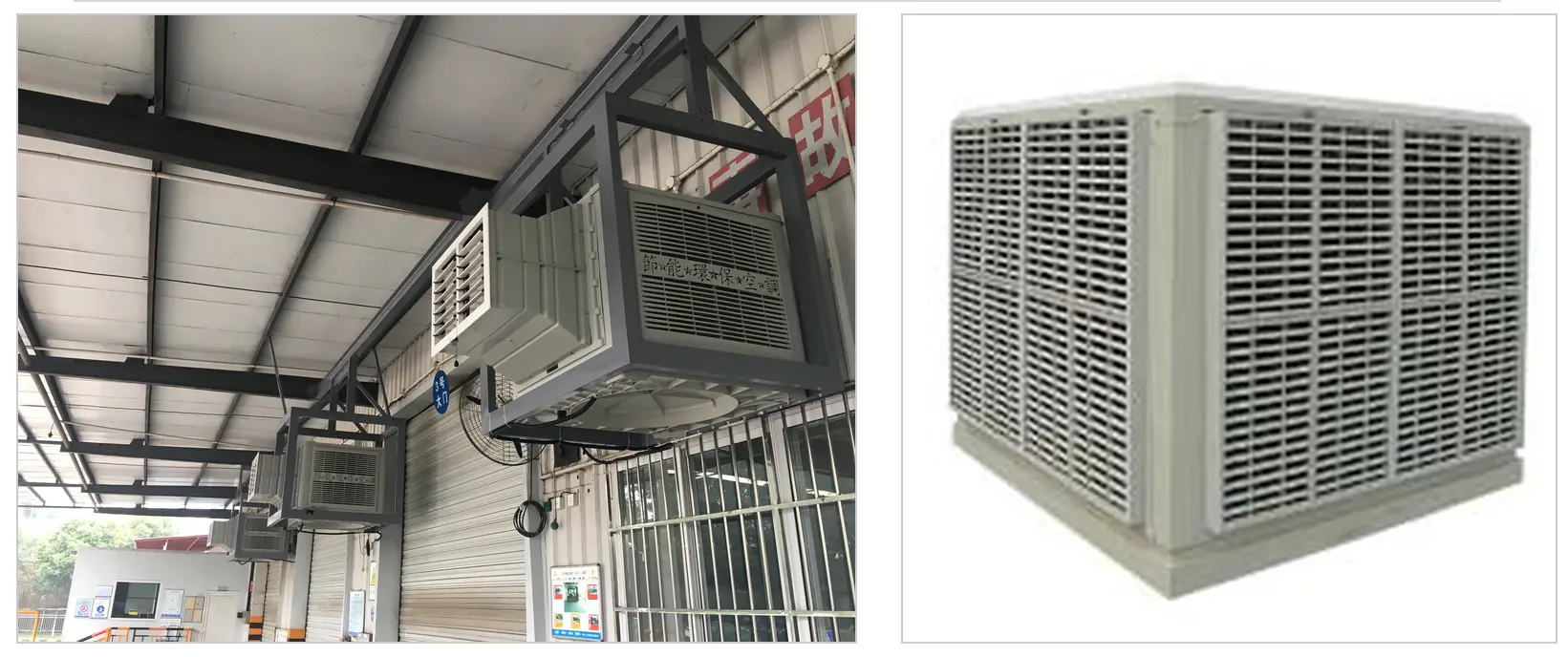
| Feature | Side-draft | Down-draft |
|---|---|---|
| Air outlet | One side of the cabinet | Bottom of the cabinet |
| Typical installation | Ground stand; wall bracket; rooftop beside a duct | Rooftop over a vertical duct |
| Cover pattern | Side outlet or duct clearance; hem shaped around supports | Base or curb clearance; reinforced top and roof tie-downs |
| Common markets | US Southwest plus industrial sites in Europe and the Gulf | Primarily North American rooftop systems |
There Is No Universal Cover Size
Common US dimensions such as 28 × 28 × 34 in and 34 × 34 × 36 in are useful shopping references, not an official standard. Brand, model year, pad frame, motor housing, duct, and installation hardware can change the finished outside dimensions. Portable and industrial coolers sold in Europe and the Gulf also use many metric cabinet sizes, so measure the actual installed unit.
How to Measure in Inches or Centimetres
Use one unit system throughout the quote. Measure the cabinet—not the cooling pad—and do not add your own fit allowance; the cover pattern should add controlled ease during production.
- Width — maximum outside measurement across the front face
- Depth — maximum outside measurement from front to back
- Height — cabinet base to the highest fixed point, excluding a separate stand unless the cover must enclose it
- Protrusions — size and location of motor housings, disconnect boxes, water inlets, valves, and control panels
- Outlet and duct — dimensions, position, and the side on which each connection sits
- Mounting — ground, roof curb, wall bracket, or window frame; include clear photos from the front and side
US, UK, Europe, and Gulf Installations
In the US Southwest, both side-draft and rooftop down-draft cabinets are common. UK and European buyers more often need covers for portable or wall- and roof-mounted industrial evaporative coolers, while Gulf projects frequently involve large wall-mounted or rooftop units exposed to dust and intense UV. The measurement method stays the same, but the fabric, openings, and fastening plan should match the installed climate and structure.
Fit and Climate Change the Cover Build
A tight cover stresses seams and corners; a loose cover catches wind and abrades the cabinet. Dry high-UV sites benefit from UV-resistant coated fabric, snowy sites need a reinforced top and secure tie-downs, and wet windy climates need sealed seams plus designed ventilation or drainage rather than an airtight plastic sheet.
| Exposure | Useful cover features | Main fit risk |
|---|---|---|
| Dry and sunny | UV-resistant coated fabric and stable tie-downs | Brittle fabric and wind lift |
| Cold and snowy | Reinforced top seams and load-shedding shape | Pooled water or snow on a sagging top |
| Wet and windy | Weather-resistant fabric; sealed seams; vents or drainage | Condensation and cover abrasion |
Prepare the Unit Before Measuring the Final Fit
A cover does not replace winterizing. Disconnect power, shut off and drain the water system, clean and dry the cooler, protect exposed lines, and seal the indoor duct before installing the cover. Use the detailed winter guide for the correct sequence by installation type.
Ordering Checklist
Send maximum width × depth × height, the draft type, measurement unit, installation method, climate, required fabric, and photos that show every connection. For fleets, list each model and quantity separately; similar-looking cabinets should not be assumed to share one cover pattern.